Mole calculations
The mass of one mole of atoms is easily calculated, it is simply the relative atomic mass expressed in grams.
Hydrogen- Ar=1 so 1g
Carbon- Ar= 12 so 12g
The mass of one mole of a substance is also easily calculated by working out the formula mass (Mr) and expressing it in grams:
H₂
- Mr = 2 so mole is 2g
Calculating the relative atomic mass
Example:
Chlorine has two isotopes: chlorine-35 and chlorine-37
A typical sample of chlorine will be 75% chlorine-35 atoms and 25% chlorine-37 atoms.
Total mass of 100 atoms= (75 x 35) + 5 x 37)= 3550
Mean mass of 1 atom= (3550 ÷ 100)= 35.5
Ar of chlorine is 35.5
Atomic number, mass number, isotopes and relative atomic mass
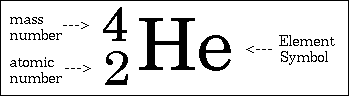 Atomic number= number of protons in the nucleus of an atom
Mass number= number of protons + number of neutrons in the nucleus of an atom
Isotopes are atoms that have the same atomic number but different mass numbers. This is because they contain the same number of protons but different numbers of neutrons.
Relative atomic mass is calculated from the masses and relative abundances of all the isotopes of a particular element. It is usually given in the symbol Ar.
